
What Can You Do When Your Clothes Are Covered in Pet Hair?
Published 2 Mar 2026

What can you do when your clothes are covered in pet hair?
Usually, you notice the pet hair when it is least convenient. You are dressed. One hand is already on the door. Then you catch your reflection and realize your black sweater now looks like it belongs to the cat.
If you live with a dog or cat, this is normal. Annoying, but normal. Pet hair turns up on sleeves, couch cushions, throw blankets, car seats, and somehow the one outfit you were actually happy with. The frustrating part is that some fur brushes off easily, while other fur acts like it signed a lease.
That is why generic advice often feels flimsy. You are not always dealing with the same fabric, the same amount of shed, or the same level of urgency. A quick pass on a smooth jacket is one thing. Cleaning a woven sofa before guests arrive is another.
The fix is not complicated, though. You need to know which method works for which surface, and you need one tool that is fast enough to use in real life, not just in an ideal Saturday-cleaning fantasy.
This guide covers the quick fixes that still earn their place, where reusable brushes pull ahead, what to look for in a self-cleaning design, and how to work a product like PeasyDeal's pet hair remover brush into your routine without turning the article into a hard sell.
Why pet hair clings to clothes and furniture
Pet hair is light. Fabric is textured. Add a little static, a little friction, and suddenly a few loose hairs become a full cleanup project.
That is the whole game. Hair that sits loosely on top of a cotton tee may come off with almost no effort. Hair caught in a knit sweater, fleece layer, blanket, or couch fabric is a different story. Those materials give fur somewhere to hold on.
Four things usually make the problem worse:
Static: dry fabrics and pet fur attract each other, especially on synthetic blends.
Texture: wool, fleece, upholstery, and woven car seats trap hair more easily.
Movement: once you sit down, walk around, or keep wearing the item, hair gets pushed deeper.
Timing: most people are not doing planned pet-hair maintenance. They are reacting at the last second.
That last one matters more than people admit. The best pet-hair tool is often the one you can grab and use in thirty seconds.
Which fabrics give you the most trouble?
If pet hair seems random, it usually is not. Certain fabrics almost invite it in. Knit sweaters, fleece pullovers, soft throws, velvet-like upholstery, and textured car seats hold onto fur much more aggressively than smoother cotton or tightly woven outerwear.
That matters because people often judge a tool too quickly. A brush that works beautifully on a sofa cushion may need a slower pass on a fuzzy cardigan. A lint roller that looks fine on a blazer can feel almost useless on a blanket covered in embedded undercoat. When you start paying attention to fabric texture, pet-hair cleanup gets less mysterious and a lot less frustrating.
What should you do first when you are in a rush?
If you only have a few minutes, match the tool to the surface instead of trying to force one method to do everything.
Fast decision framework
A shirt, sweater, or jacket with visible surface hair: use a lint roller or reusable brush.
A sofa, cushion, throw, or car seat with embedded fur: use a reusable brush with firm, directional strokes.
A laundry pile that is already coated in hair: tumble it briefly before washing.
No pet-hair tool nearby: use a slightly damp rubber glove or microfiber cloth.
You need a touch-up at work, in the car, or while traveling: use a compact brush.
The mistake is assuming one solution should win every time. Sticky rollers are still handy. They are just not the best answer for heavy, repeated cleanup.
Which pet hair removal method works best?
Each option solves a different problem. Once you see that, the whole category makes more sense.
Tool | Best for | Speed | Ongoing cost | Where it falls short |
|---|---|---|---|---|
Sticky lint roller | One quick clothing rescue | Very fast | High if used every day | Burns through refills and struggles with larger jobs |
Damp rubber glove | Cushions, blankets, sofa arms | Moderate | Low | Slower and a bit clumsy |
Dryer prep with dryer sheet | Laundry before washing | Moderate | Low to medium | Not helpful once you are already dressed |
Vacuum attachment | Bigger upholstery cleanup | Moderate | Low | Too bulky for everyday touch-ups |
Reusable self-cleaning brush | Clothes, sofas, bedding, car seats | Fast | Low | Best on dry surfaces and with the right technique |
That last point is the one most product pages skip over. A reusable brush is not just a greener lint roller. It is better thought of as the everyday maintenance tool. It is what you reach for when the problem keeps coming back.
When a reusable brush is the better buy
If pet hair shows up once in a while, you can live with a sticky roller. If it shows up every day, that gets old fast.
That is the real dividing line. People who benefit most from a reusable pet hair remover brush usually have one or more of these situations:
a dog or cat that sheds year-round
dark clothes that show every loose hair
upholstered furniture that turns furry overnight
a car interior that doubles as pet transport
frustration with constantly buying roller refills
And this is where a self-cleaning base matters. Without it, a reusable tool can still feel like work. With it, the routine becomes easier: brush, dip, pull out clean, repeat, empty the tray later.
You can feel the difference in everyday use.
Scenario 1: The black-sweater panic
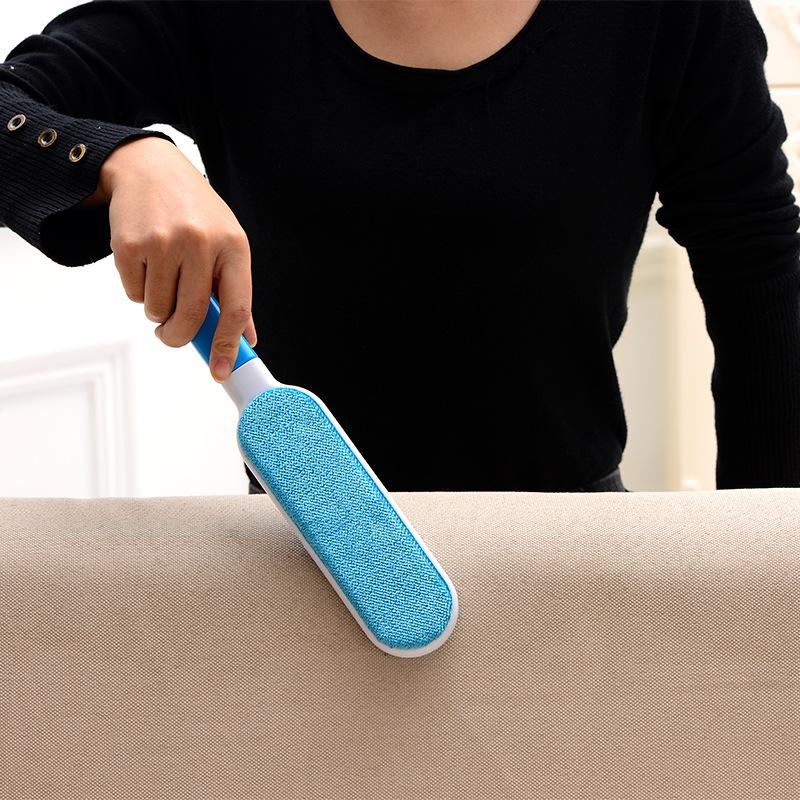
You are about to leave, and your outfit tells the truth about how much your cat loves your closet. This is a classic reusable-brush moment. Larger visible areas clear faster than they do with a small sticky roll.
Scenario 2: The couch before company
A sofa full of fur looks worse than it is, but it takes the right tool to fix quickly. On woven upholstery, a directional brush usually lifts more hair than a roller because it is sweeping hair together instead of just tapping at the surface.
Scenario 3: The back seat after a weekend trip
Car seats are sneaky. Hair works its way into the fabric, and you rarely want to drag out the vacuum after every outing. A reusable brush is the in-between answer that keeps the problem from becoming a full detailing session.
Scenario 4: The blanket your dog has quietly claimed
If you do not want to wash it every time your pet naps there, a brush gives you a fast reset. It is not a substitute for laundry forever, but it keeps the blanket usable between washes.
Scenario 5: The office or travel touch-up
This one is underrated. Plenty of people leave home looking fine and arrive somewhere covered in fresh fur from the car, coat, or tote bag. A compact brush is much more realistic than expecting a lint roller to live in every drawer.
What features actually matter in a pet hair remover brush?
Some product pages in this category are all adjectives and no clarity. The useful questions are more practical.
Look for this checklist
Self-cleaning base: because nobody wants to peel fur off the tool by hand.
Double-sided cleaning surface: useful for larger cleanup jobs.
Comfortable grip: if the tool feels awkward, it will stay in a cabinet.
Clothing and upholstery versatility: one tool should cover both.
Travel-size option: great for cars, offices, and overnight bags.
Easy-empty tray or chamber: cleanup should stay easy at the end too.
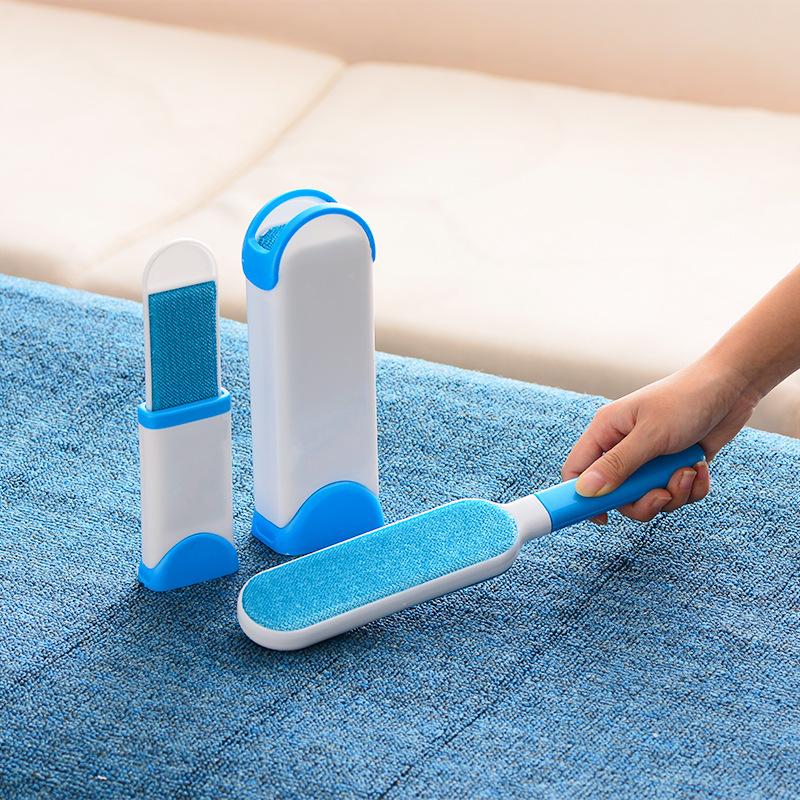
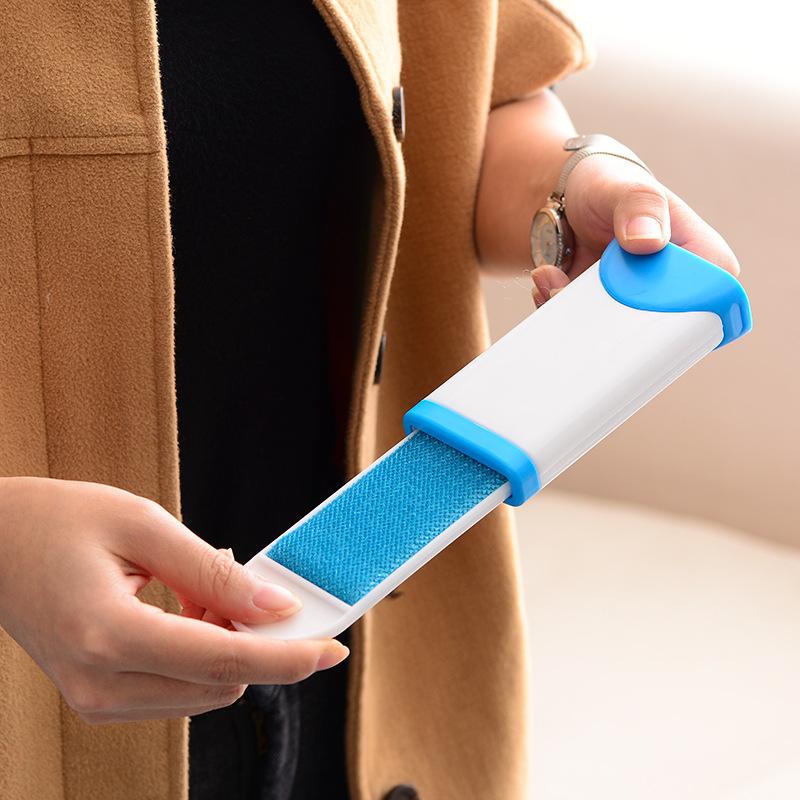
That is also why the Pet Hair Remover Brush at PeasyDeal makes sense in this article as a practical example. It is not positioned as some miracle gadget. It is a straightforward reusable set with a full-size brush, a self-cleaning base, and a compact travel-size unit. Those are exactly the features that matter if the goal is everyday convenience.
Shop it here: https://peasydeal.com/product/pet-hair-remover-brush-i.7705301745902
How to get better results from a reusable brush
This is simple, but not quite mindless. Technique changes the result.
Better workflow
Work on a dry surface.
Hold the fabric or cushion steady if you can.
Brush in one direction with medium pressure.
Let the brush collect a visible amount of fur.
Slide it into the cleaning base and pull it back out.
Repeat until the surface looks clear.
Empty the tray when it is full.
That one-direction rule matters. If you swipe around randomly, the brush loses some of its advantage. It is meant to gather hair efficiently, not just move it around.
Best method by surface
You do not need to swear loyalty to one tool forever. You just need the right first move.
Surface or situation | Best first move | Why it works |
|---|---|---|
Dark clothes before work | Reusable brush | Clears broad visible areas quickly |
One patch of fur on a blazer | Sticky roller | Fastest small rescue |
Sofa cushions | Reusable brush | Better at lifting visible embedded hair |
Laundry basket full of fur | Short dryer prep before wash | Helps loosen hair before the wash cycle |
Car seat fabric | Reusable brush, then vacuum if needed | Good maintenance without a full cleanup session |
Throws and bedding | Reusable brush | Quick reset between washes |
If you remember one thing, make it this: sticky rollers are for isolated emergencies. Reusable brushes are for recurring mess.
What should you do on the really bad shedding days?
Some days are just worse. Seasonal shedding kicks in, your dog spends an hour on the couch, your cat claims the laundry basket, and suddenly everything looks fur-coated at once. This is usually the moment people either panic-clean or decide the problem is unbeatable.
It is beatable. You just need to stop treating every hairy surface like it requires the same level of cleanup.
Use this simple priority framework
Clothes you need now: clear the visible hair and move on.
The sofa or chair people will actually see: do a quick maintenance pass.
Blankets or bedding: remove visible fur, then decide whether a full wash is worth it.
Laundry that is heavily coated: loosen the hair before the wash cycle instead of hand-picking it off.
Car interiors: handle the obvious fur now, save the full vacuum for later.
This sounds basic, but it saves a lot of wasted effort. Not every pet-hair problem is a deep-clean problem. Often it is just a visibility problem.
Picture a Monday morning after a weekend of your dog riding in the car, sleeping on the throw blanket, and napping on the couch. You do not need to sanitize your life. You need your outfit to look clean, the sofa to look normal, and the back seat not to embarrass you. A reusable brush is extremely good at that middle layer of maintenance.
Reusable brush or sticky roller: which one is better long term?
For tiny emergencies, sticky rollers are still good. They are fast. They are familiar. Nobody needs to pretend otherwise.
But the equation changes when you use them every day.
Sticky rollers make sense when:
the hair is light and localized
you want one quick pass on a jacket or trouser leg
you are solving an occasional problem
Reusable brushes make more sense when:
the same surfaces need cleanup again and again
you are dealing with sweaters, upholstery, throws, or car seats
you want less waste and fewer refills
you prefer one tool that can stay in rotation
This is really a convenience question. A lint roller is easy one sheet at a time. A reusable self-cleaning brush is easier across weeks and months. That is why a set with both a main brush and a compact travel brush feels useful in practice. The big brush stays near where you dress or where your pet sheds most. The small one handles the last-second situations that happen everywhere else.
Mistakes that make the job harder
Some pet-hair frustration is just physics. Some of it is self-inflicted.
Avoid these
using the brush on damp fabric
scrubbing in every direction
letting hair build up for too long
expecting a sticky roller to handle a whole sofa
forgetting that fleece, wool, upholstery, and smooth cotton all behave differently
skipping laundry prep when a garment is heavily coated
None of this is dramatic. It is just the difference between "this tool does not work" and "I was using the wrong approach."
Build a routine instead of fighting a daily surprise
The real win is not removing one sleeve full of fur. It is reducing how often the problem catches you off guard.
Simple daily routine
Keep the main brush where you get dressed or where pet hair first bothers you.
Do a thirty-second pass on dark clothes before leaving.
Brush the sofa or favorite pet spot every day or two.
Keep the compact brush in the car, office, or travel bag.
Use the dryer-prep trick when laundry is heavily coated.
That is it. No elaborate cleaning calendar. No giant reset every time. Just a better default.
Is a reusable pet hair remover brush worth it?
For occasional use, maybe not. For daily life with a shed-heavy pet, it usually is.
It is worth it when:
you are tired of buying lint roller refills
you need one tool for clothes and furniture
your couch always looks furry again by tomorrow
you want something faster than dragging out the vacuum
you like the idea of a home tool plus a compact travel version
This is also why a soft mention works better than a hard pitch here. Once readers understand the problem and the feature checklist, they can judge for themselves whether something like the PeasyDeal brush fits their routine.
The bottom line
If your clothes are covered in pet hair, you do not need more cleaning drama. You need the right response for the right moment. Sticky rollers still deserve drawer space. Dryer prep still helps before laundry. But if pet hair is part of your everyday life, a reusable self-cleaning brush is usually the most practical way to stay ahead of it.
That matters because the best cleanup routine is the one you will still use on an ordinary rushed weekday.
One good brush at home, one compact brush for touch-ups, and a simple routine will solve more than another pack of sticky sheets ever will.
FAQ
What is the quickest way to remove pet hair from clothes?
For immediate cleanup, use a sticky lint roller or a reusable pet hair brush. If the fur covers a larger area, a reusable brush is usually faster.
Do reusable pet hair remover brushes work on furniture too?
Yes. They are especially useful on sofa cushions, throws, bedding, and fabric car seats, as long as the surface is dry.
Can a reusable brush replace sticky lint rollers completely?
Not always. Rollers are still handy for tiny one-off fixes. But reusable brushes are better for frequent, larger, or more repetitive cleanup.
What should I look for in a reusable pet hair remover brush?
Look for a self-cleaning base, a stable grip, a reusable surface that works on clothing and upholstery, and a compact option for travel if that matters to you.